Your Next Customer Is an Agent With a Wallet
Agents can pay now. Fix product truth first: current price and stock, a factual description, a stable URL, and the same facts on the page and in the feed.
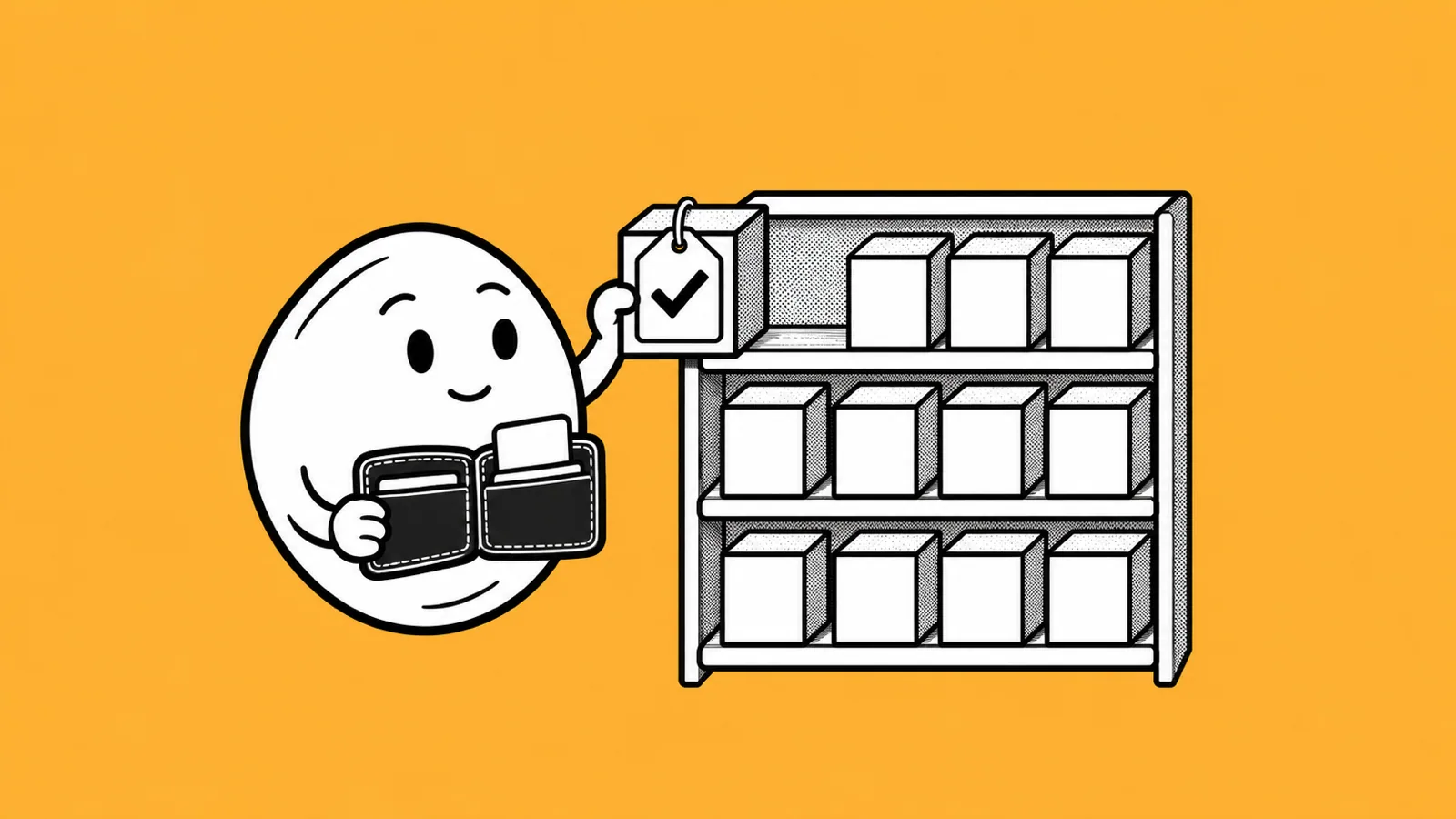
Your next customer may be an AI agent with a wallet, and on any agentic commerce Shopify checklist, the first job is making sure it reads your product facts correctly. The shopper looking at your online store's product page, your product feed, and your checkout is increasingly an agent, and several of those AI agents can now pay. I've already covered what agentic commerce is, so this post is about what to change first.
The fix isn't a new campaign. It's current price and availability, a factual plain-text description, a stable product-page URL, and the same facts on the live page and in the feed. The person still approves the purchase in ChatGPT Wallet. I'd start there.
What Changed on AI Platforms, in Plain Terms
AI agents can already pay in some systems. The person still approves the purchase. Here's the mid-November sequence for Shopify merchants.
Nov 10, 2026: OpenAI launched Businesses in ChatGPT (beta), a new sales channel. You claim your business in Business Hub, then add a product feed. Shopify merchants can connect from Business Hub or the Shopify admin. OpenAI says eligible products from Shopify Catalog are already in ChatGPT, which is its claim, not a promise that every SKU is current.
Nov 13, 2026: OpenAI introduced ChatGPT Wallet. AI agents can pay without seeing the real card number, and the user reviews the items, total, and card before approving, so an AI agent can complete checkout with the person in the loop. At launch it covers ChatGPT Pro subscribers in the US.
Nov 13, 2026: Sierra released Personal Agent Protocol 1.0, called Poppy. It lets a shopper's AI agent talk to a brand's site, built on the Universal Commerce Protocol (UCP). Sierra says every Shopify store on the ecommerce platform supports UCP and publishes a Poppy file automatically. That's Sierra's default claim, so check it on your store.
Nov 17, 2026: Google made Tasks in Gemini free in six countries. Gemini can call businesses, book appointments, and shop, which makes it one more sales channel to watch, and businesses can opt out of those calls.
Nov 19, 2026: Gemini for Mac got computer use, rolling out in English in the U.S. It can click, type, and fill forms on websites. Even without a clean feed, AI agents may still operate your live product page and try to complete checkout.
Access isn't automatic: Axios reported Amazon blocked Meta's Muse from browsing and buying.
The Wallet Is the Easy Part
In AI commerce, the wallet is the easy part. The hard part is getting the product facts right, because an AI agent has to find relevant products and pick the right offer from accurate information before any payment happens. That only works when the feed, the product page, and direct checkout describe the same product. My read: a product page still has two jobs. It converts the person who lands, and it holds up when an AI agent compares the shelf during the shopping journey.
A great shelf photo doesn't help if the box label is wrong, and these AI systems pick the product that answers the prompt, not the prettiest photo.
I'm building a Product Brain for this reason, so structured product data hangs off a stable internal product ID, not off a URL or a barcode. URLs, barcodes, and Amazon IDs are product attributes on that ID, never the key.
The OpenAI product feed schema works the same way: item_id is the key for a specific item, a group ID covers the parent listing, and an offer ID separates offers that share a URL. A GTIN is optional, and OpenAI says not to invent a value to replace a missing one.
A human still checks fields before I trust them; the same rule behind a Brand Brain: the gate is a person, not a system. I'm not claiming this lifts citations or sales. The honest case is consistency and eligibility.
Selection Risk in Agentic Commerce
Visa's benchmark is about picking the product, not about the payment going through. Visa's first Agentic Commerce Benchmark, published Nov 5, 2026, put 22 AI models from 12 labs through 15 shopping challenges. Visa reports an overall pass rate of 57.2% and says the models failed 42.8% of test runs. Visa says the best models passed 82.2% of attempts and the worst passed 28.9%.
Visa reports that about 1 in 2 (54%) of failed runs still ended in the AI making a purchase. Visa says the AI either recommended a purchase that missed the customer's requirements or failed to uncover them. Visa also reports that all three attempts passed just 34.2% of the time.
Read it for what it is: the benchmark covers product discovery and the buy or no-buy decision, not a merchant's checkout or payment, so it isn't a payment-error rate for AI shopping.
OpenAI's Wallet terms, effective Nov 12, put review on the user: "Review those details carefully. AI systems can make mistakes." They also send problems to you: "For an order problem, cancellation, return, refund, or product dispute, contact the merchant." Liability is still open: as of Nov 20, I couldn't find a CFPB rule or an FTC policy statement written for agent wallets.
Fix the Feed and Page First
If I were cleaning up a Shopify store this week, I'd start with the product facts. Each item ends with a check you can run yourself.
Make the product feed true. Send one row per purchasable item or variant. Each row needs a stable item_id, plain-text product descriptions, a public product URL, the brand, a seller name, an image URL, current pricing, and availability. The fuller build is in product data for AI agent shopping. Check: pick a few live SKUs, including one variant and one sale item, and match every feed field to your Shopify products, your Shopify product data, and the live page.
Claim the business and check Shopify Catalog. Claim it in Business Hub, then update the feed. Shopify's help docs on Shopify agentic storefronts say Catalog lists products in AI channels by default and "continuously updates your product data." Check: confirm a current SKU shows today's price.
Keep the page, the feed, and the sale price in agreement. Update the feed when a sale starts or ends, because sale dates in the feed don't schedule price changes. A mismatch can send the AI agent to the wrong offer. Check: compare price, sale price, and availability across the feed, the page, and your direct checkout for one full-price item and one sale item. If you also run a Google Merchant Center feed, compare that too.
Check Agentic Storefronts Defaults and Skip the Extras
Put the facts in text. Name the product in the H1 and first lines, and keep key facts in product descriptions and a scannable text block, not only in badge images, so each step of the customer journey has the same facts. That's my judgment, not a tested lever. Check: view a product page as plain text, or with images off, and confirm an AI agent would still find what it needs.
Verify UCP and Poppy, then move on. Shopify publishes a Poppy file by default. If every store has one, it isn't your edge. Check: confirm the file is actually published on your store and matches the live catalog.
Don't block AI agents by accident. OpenAI says "websites need to ensure agents are not inadvertently blocked," and suggests configuring the CDN or firewall to recognize signed requests. Don't weaken your fraud controls to do it. Check: confirm your security rules aren't blocking documented ChatGPT agent access.
Don't build a thin page for every question. Google's guidance on generative AI features warns against separate content for every query variation. My instinct is about 10 substantive topic pages, not hundreds of single-question URLs.
I'm not asking you to treat structured data as an AI-citation lever, and I'm not promising that a complete feed wins a recommendation. None of my sources offer a method-stated sales or citation result for these fixes. Fix the facts, then test.
FAQs: Agentic Commerce Shopify?
What Should Shopify Stores Fix First?
Product truth. Keep price, availability, description, and URL identical on the live page and in the feed. Then claim your business and check Shopify Catalog.
Can Shopping Agents Pay Now?
In some systems, yes. ChatGPT Wallet lets AI agents pay without seeing the real card number, and the person reviews and approves. At launch it's limited to ChatGPT Pro subscribers in the US, so most shoppers can't yet.
What Goes in a Product Feed?
One row per purchasable item or variant, with a stable item_id, description, public URL, price, and availability. Update the feed whenever price or stock changes.
Should I Publish Question Pages?
No. Google warns against separate content for every query variation. A few substantive pages beat hundreds of thin ones.
Start With the Facts
AI tools will keep changing. In agentic commerce, the work that compounds is one verified set of product facts, on the page and in the feed, that a person will still stand behind. If an AI agent compared your catalog tomorrow, would it get the product right?
Pick three live SKUs this week and compare the feed, the page, and checkout. Send me a message if you want to connect on all things AI and agentic shopping.